
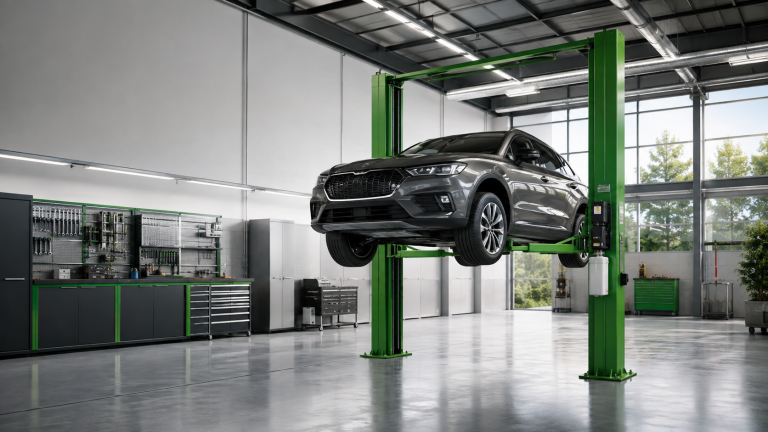
What Floor Conditions Should You Check Before Installing a Car Lift?
A practical checklist for evaluating workshop floor and concrete conditions before installing a two-post, four-post, scissor or alignment lift.
Read MoreResources & Insights
Technical resources, workshop planning guides, product information and DAYI company news.
Recently Published
A practical checklist for evaluating workshop floor and concrete conditions before installing a two-post, four-post, scissor or alignment lift.
Read More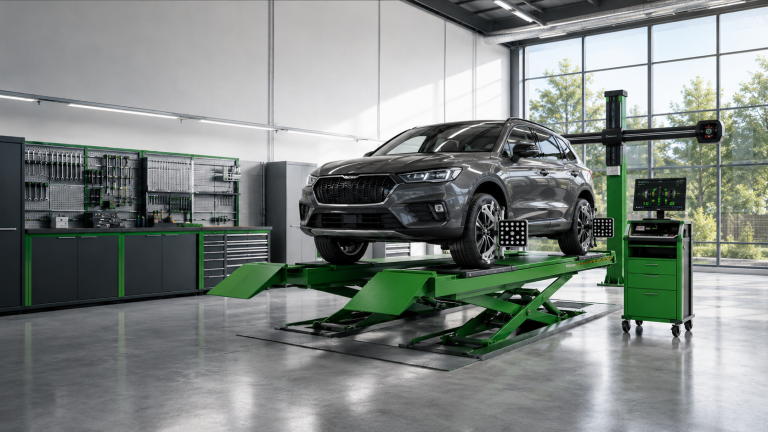
A practical guide to choosing a lift for wheel alignment, including four-post and alignment scissor lifts, turntables, slip plates, runway requirements and workshop setup.
Read More
A practical comparison of 4-ton and 5-ton car lifts for workshops, covering vehicle weight, service mix, lift capacity and future workload.
Read MoreResource Library
A practical checklist for evaluating workshop floor and concrete conditions before installing a two-post, four-post, scissor or alignment lift.
Read More
A practical guide to choosing a lift for wheel alignment, including four-post and alignment scissor lifts, turntables, slip plates, runway requirements and workshop setup.
Read More
A practical comparison of 4-ton and 5-ton car lifts for workshops, covering vehicle weight, service mix, lift capacity and future workload.
Read More
A practical guide to choosing a car lift based on the vehicles you service, the work you perform, available workshop space, lift capacity and…
Read More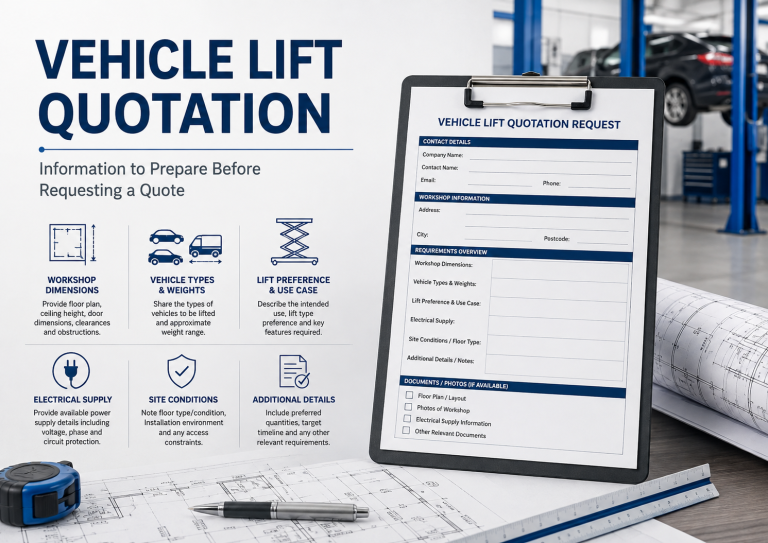
Prepare workshop dimensions, vehicle types, intended use, electrical supply and site conditions before requesting a vehicle lift quotation.
Read More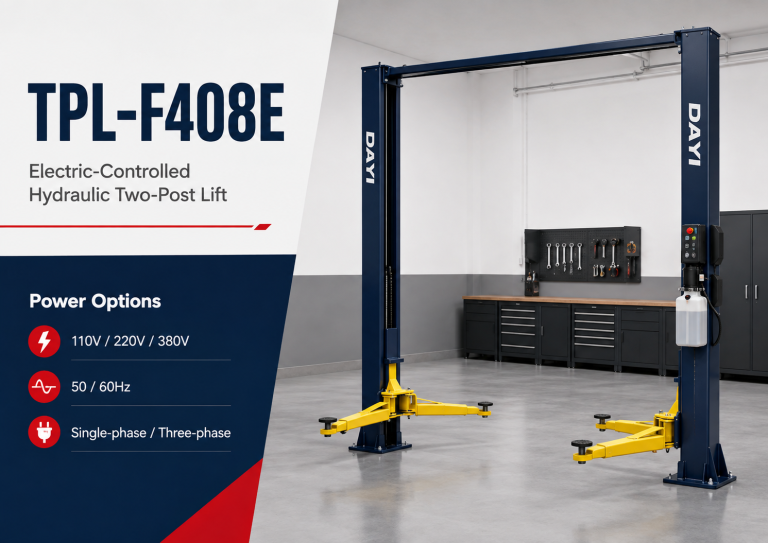
Review the TPL-F408E power options, including 110V, 220V and 380V, as well as 50/60Hz and single-phase or three-phase configurations.
Read MoreFAQ
Common questions about automotive workshop equipment, product selection and workshop planning.
It depends on the actual vehicle weight, weight distribution, lifting points and the specifications of the selected lift. Many passenger SUVs may fall within the capacity range of a 4-ton lift, but suitability should always be checked for the specific vehicle and lift.
Prepare the types of vehicles you service most often, the heaviest vehicles you expect to lift, the work performed in the service bay, available workshop dimensions, ceiling height and known floor conditions. This information helps narrow down the suitable lift type and capacity before comparing individual models.
The TPL-F408E has a rated lifting capacity of 4,080 kg. When evaluating whether it is suitable for a workshop, the lifting capacity should be considered together with the types and specifications of vehicles that will normally be serviced.
The maximum lifting height of the TPL-F408E is 1,800 mm. Workshop operators should consider this together with the overall lift height, vehicle dimensions and available vertical working space.
The TPL-F408E supports 110V, 220V and 380V power options, with 50Hz or 60Hz frequency and single-phase or three-phase configurations. The required electrical configuration should be confirmed according to the actual workshop power supply before ordering.
Before choosing a two-post lift, review the available workshop space, ceiling height, vehicle types normally serviced, electrical supply and planned installation position. These factors help determine whether the lift is suitable for the intended workshop environment.
Workshop dimensions help determine whether the available service area can accommodate the lift and support normal vehicle movement and technician access. Equipment dimensions should be reviewed together with ceiling height, walls, columns, nearby equipment and the planned vehicle path.
A general automotive repair workshop layout should consider service bay positions, vehicle entry and exit paths, workbench areas, tool and parts storage, open circulation space, ceiling height, power access and existing structural restrictions.